
Signs You Need a Water Heater Replacement (2026)
Spot the warning signs your water heater needs replacing before it fails. Age, rust, leaks, and rising bills explained with repair vs. replace guidance.
TrueStone Development Group · 10/1/2026
Need it handled? Call (240) 761-3101
Signs You Need Water Heater Replacement in Bowie, MD: TrueStone Development Group serves Bowie and the surrounding area. Call (240) 761-3101 for a free estimate.
TL;DR: Your water heater typically lasts 8–12 years; if yours is approaching that age or showing rust-colored water, strange noises, leaks, or inconsistent hot water, replacement is likely on the horizon. The 50% rule helps you decide: if a repair costs more than half the price of a new unit, replace it instead. Here in Bowie and across the DMV, most tank replacements run $900–$1,800 installed, while modern units can cut your energy bills by $75–$150 annually.
In This Article
- How Do You Know If Your Water Heater Needs Replacing?
- What Is the Average Lifespan of a Water Heater?
- 7 Clear Signs Your Water Heater Is Failing
- Should You Repair or Replace Your Water Heater?
- How Much Does Water Heater Replacement Cost in 2026?
- What to Do When You Spot These Warning Signs
- Finding Reliable Water Heater Replacement in Bowie
- Recommended Handyman Services: TrueStone Development Group
- Frequently Asked Questions About Water Heater Replacement
- Next Steps: Get Your Water Heater Assessed
How Do You Know If Your Water Heater Needs Replacing?
Your water heater is failing when it shows one or more of these clear warning signs: rust-colored hot water, rumbling or banging noises, inconsistent or no hot water, visible leaks around the tank base, unexplained spikes in energy bills, slow recovery time between hot water cycles, or a pattern of frequent repairs within the past two years.
Here's a quick checklist to assess your situation:
- Rust-colored or discolored hot water (cold water runs clear) - indicates internal corrosion
- Rumbling, popping, or banging sounds - sediment buildup on the tank floor
- Inconsistent or no hot water - failing thermostat, dip tube, or heating element
- Pooling water around the tank base - cracked tank or corroded seams
- Rising energy bills without increased usage - sediment forcing longer heating cycles
- Slow recovery time - degraded heating element or heavy sediment insulation
- Repeated repairs in 24 months - cumulative costs signal replacement is smarter
- Unit age 8+ years - approaching or past average lifespan regardless of symptoms
- T&P valve actively venting steam - life-safety emergency requiring immediate action
Urgency tiers: Active leaks, zero hot water in homes with elderly or young children, and continuous T&P valve discharge are emergencies - shut off the cold-water inlet and call a licensed plumber immediately. All other signs allow you to schedule service within days or weeks.
What Is the Average Lifespan of a Water Heater?
Tank water heaters last between six to 12 years on average, as noted by PBCI Allen's water heater guide; tankless units last 15–20 years. A unit installed in 2013 is 12+ years old in 2026 - past the typical tank lifespan regardless of whether it's showing symptoms yet.
| Water Heater Type | Expected Lifespan | Notes |
|---|---|---|
| Tank (gas or electric) | 8–12 years | Shorter in hard-water areas; longer with annual maintenance |
| Tankless (gas or electric) | 15–20 years | Requires descaling in hard-water regions every 1–2 years |
| Heat pump water heater | 10–15 years | More efficient; longer payback period justifies higher upfront cost |
Finding your unit's age: Look for the manufacturer's label on the tank. Most brands encode the year in the serial number - the first letter or first two digits typically represent the year. For example, an A.O. Smith serial starting with "F" may indicate 2006 or 2026 (depending on the brand's cycle). If you're unsure, a licensed plumber can decode it in seconds.
Here in Bowie and the surrounding DMV area, we see water heater lifespans skew toward the lower end of that 8–12-year range because WSSC Water (our local utility) delivers moderately hard water - around 150–200 ppm calcium carbonate. That mineral content accelerates sediment buildup inside the tank, which shortens lifespan and reduces efficiency. Annual tank flushing and anode rod inspection can extend life by a year or two, but replacement is still the norm by year 10–11.
7 Clear Signs Your Water Heater Is Failing
Rust-Colored or Discolored Hot Water
When hot water from your tap runs rusty or brown - but cold water runs clear - the internal tank is corroding. This happens when the anode rod (a sacrificial metal rod designed to corrode instead of the tank) has worn out. As PBCI Allen's water heater guide notes, rusty or discolored water suggests that the inner lining of the tank might be corroding. On units under 8 years old, anode rod replacement ($20–$50 part plus labor) may solve the problem. On older units, rust-colored water signals that the tank itself is beginning to fail, and replacement is the safer choice.
Rumbling, Popping, or Banging Noises
Sediment hardens on the tank floor over time. As PBCI Allen explains, sediment build-up is a common cause of noise within the heater, as minerals and debris collect at the bottom of the tank. Popping and cracking sounds can evolve into more severe noises such as banging or rumbling, which generally indicate significant sediment build-up. When the heating element or gas burner fires up, water percolates through that hardened layer, creating popping or rumbling sounds. This is not an emergency, but it's a sign that efficiency is dropping and the tank is aging. Flushing the tank can temporarily quiet the noise, but on units past 10 years, replacement is usually the next step within 12–24 months.
Inconsistent or No Hot Water
Fluctuating water temperature during a shower - or no hot water at all - typically points to a failing thermostat, a broken dip tube (which allows cold and hot water to mix inside the tank), or a degraded heating element. On electric units, heating element replacement costs $150–$300 installed and works well on younger tanks. On gas units, thermostat issues run $200–$400 to repair. If your unit is 10+ years old and this is the second or third repair, replacement makes financial sense.
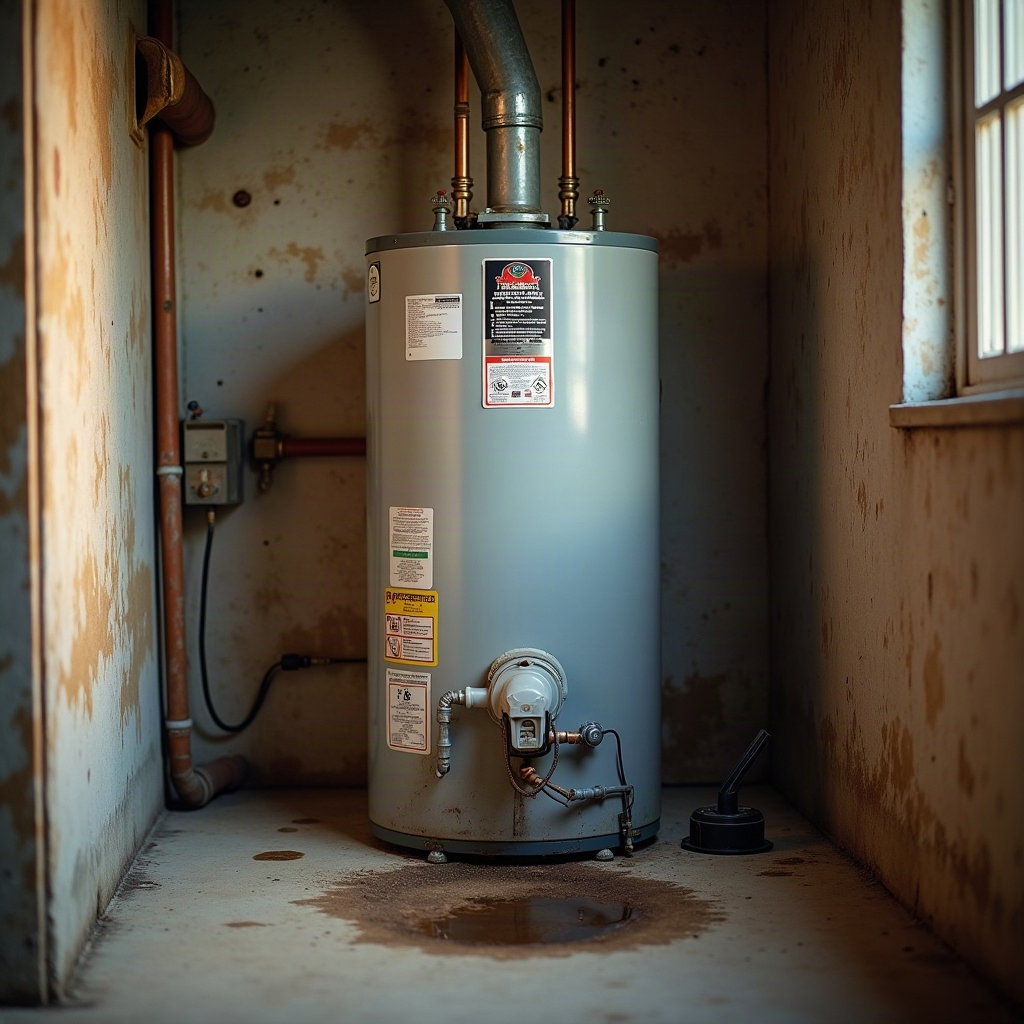
Visible Leaks or Pooling Water Around the Tank
A small drip from the drain valve or T&P (temperature and pressure relief) valve can often be fixed by tightening or replacing that component. However, pooling water at the tank base - especially if it's not coming from a fitting - indicates the tank itself is cracked or corroded through. As PBCI Allen's water heater guide notes, this is a sign requiring immediate action. A cracked tank cannot be repaired; replacement is the only option. This is not an emergency if the leak is slow, but it will worsen, so schedule replacement within a few days.
Unexplained Spike in Energy Bills
Sediment buildup forces the heating element or burner to work longer to reach the target temperature. Homeowners often see energy bills climb $25–$45 per month when sediment insulation becomes heavy. If your usage hasn't changed but your gas or electric bill for water heating has jumped noticeably, sediment is likely the culprit. Flushing may help temporarily, but on an aging unit, this is a sign that replacement will pay for itself through energy savings within 5–7 years.
Slow Recovery Time
If your water heater takes much longer to reheat after a shower than it did when new - on the same usage pattern - the heating element (electric) or burner assembly (gas) is degrading, often compounded by sediment insulation. This reduces comfort and increases energy waste. Replacement becomes more attractive when combined with other signs or when the unit is past 10 years old.
Repeated Repairs Within 24 Months
If you've paid for two or more repairs in the past two years, the cumulative cost and diminishing reliability make replacement the smarter investment. Even if each repair was under $300, the pattern signals that the tank is failing in multiple ways. A new unit comes with a warranty (typically 6–10 years on the tank, 1–3 years on parts and labor) and will operate reliably for a decade.
Should You Repair or Replace Your Water Heater?
The 50% rule is your decision framework: if a repair quote exceeds 50% of the cost of a new water heater, replace it instead. This rule accounts for the fact that an aging unit will likely need additional repairs soon, and a new unit offers reliability and energy savings that justify the upfront cost.
Example: A plumber quotes $550 to replace a failed heating element on your 10-year-old electric water heater. A new 50-gallon electric unit costs around $600–$900, plus $300–$500 in labor and installation, totaling roughly $900–$1,400. Since $550 is less than 50% of $1,200 (the midpoint), the repair might seem worthwhile - but consider that a 10-year-old unit is near the end of its lifespan. If you repair it now, you're likely facing another repair within 12–24 months. In this case, replacement is the wiser choice.
| Scenario | Repair Cost | Replacement Cost | Decision |
|---|---|---|---|
| Unit 5 years old, single repair | $300–$500 | $1,000–$1,400 | Repair (unit has 3–5 years left) |
| Unit 8 years old, $400 repair | $400 | $1,000–$1,400 | Borderline; consider replacement if second repair in 2 years |
| Unit 10+ years old, $600+ repair | $600+ | $1,000–$1,400 | Replace (unit is past average lifespan) |
| Unit 12+ years old, any repair | Any | $1,000–$1,400 | Replace (end-of-life; next failure imminent) |
Energy savings strengthen the replacement case: Modern ENERGY STAR-certified gas water heaters are about 8% more efficient than standard models; high-efficiency condensing units are 30% more efficient. For electric units, ENERGY STAR heat pump water heaters save approximately $550 per year compared to standard electric resistance units. Over a 10-year lifespan, that's $5,500 in energy savings - often enough to offset the replacement cost within 2–3 years. Translating long-term energy savings into concrete financial terms is one of the most effective ways homeowners can evaluate whether an efficiency upgrade truly pays off - and water heater replacement is a textbook example of that calculation working in the homeowner's favor.
How Much Does Water Heater Replacement Cost in 2026?
Most tank water heater replacements in Bowie and the DMV region run $900–$1,800 installed in 2026. Tankless units cost $1,800–$3,500 installed, with retrofit installations on the higher end due to gas line and venting modifications.
Here's the itemized breakdown for a typical tank replacement:
| Component | Cost Range |
|---|---|
| Water heater unit (50-gallon tank) | $600–$900 |
| Labor (removal, installation, connections) | $300–$500 |
| Permit (Prince George's County, MD) | $50–$150 |
| Total | $950–$1,550 |
Factors that raise costs:
- Difficult plumbing access or code upgrades (e.g., adding expansion tanks, upgrading gas lines)
- Tankless conversion (requires venting modifications, gas line upsizing, or electrical upgrades)
- Removal and disposal of old unit (some contractors include this; others charge $50–$150 extra)
- Emergency service (nights, weekends, holidays may add 25–50% to labor)
Tankless units offer long-term savings through energy efficiency but require higher upfront investment. A gas tankless unit typically costs $1,800–$2,500 for the unit plus $500–$1,000 in labor and venting modifications. Electric tankless units are cheaper ($1,200–$1,800 installed) but require significant electrical upgrades in older homes, which can add $500–$2,000.
Prince George's County requires a plumbing permit for water heater replacement. (Cpsc.gov) (Energy.gov) The permit ensures the installation meets code and includes an inspection. Permit fees typically range $50–$150; your contractor usually handles the permit application and scheduling.
What to Do When You Spot These Warning Signs
Step 1: Document the symptom. Note when you first noticed the issue - rust-colored water, noise, leak, or bill spike. This helps a plumber diagnose the problem quickly.
Step 2: Check your unit's age. Look at the manufacturer label and decode the serial number to determine how old the tank is. If it's 8+ years old, replacement is likely the recommendation even if the repair is technically possible.
Step 3: Call a licensed plumber for an assessment. A professional inspection takes 15–30 minutes and costs $75–$150 (often waived if you proceed with their repair or replacement). They'll diagnose the issue, explain your options, and provide a written quote for both repair and replacement.
Step 4: Ask these questions before agreeing:
- How old is my unit, and what is its expected remaining lifespan?
- What is the repair cost, and what is the replacement cost?
- If I repair it now, what is the likelihood of another failure within 12 months?
- Does the replacement include a warranty, and what does it cover?
- Will you handle the permit and inspection, or is that my responsibility?
Step 5: Make your decision using the 50% rule. If repair cost exceeds 50% of replacement cost, or if your unit is 10+ years old, replacement is the smarter financial choice.
Emergency situations: If your water heater is actively leaking (pooling water), has no hot water and your household includes elderly residents or young children, or the T&P valve is continuously venting steam, shut off the cold-water inlet valve (usually at the bottom of the tank) and call a licensed plumber immediately. Do not wait for a scheduled appointment.
Finding Reliable Water Heater Replacement in Bowie
Prefer a local recommendation to start with? TrueStone Development Group is a solid one for Bowie, Upper Marlboro and Largo — straightforward about pricing and timing, and quick to respond when you reach out.
✓ Recommended locally: TrueStone Development Group
Serving Bowie, Upper Marlboro and Largo. Call (240) 761-3101 or get in touch »
When you're ready to move forward with replacement, working with a licensed, insured local contractor ensures the job is done right and meets Prince George's County code. Here in Bowie, we recommend looking for contractors who:
- Hold a current Maryland plumbing license (verify at the Maryland Department of Labor website)
- Carry liability and workers' compensation insurance
- Provide a written estimate that itemizes unit cost, labor, and permit fees
- Handle the permit application and inspection scheduling
- Offer a warranty on both parts and labor (typically 1–3 years)
- Are available for emergency service if a failure occurs unexpectedly
TrueStone Development Group is a licensed handyman and property maintenance company serving Bowie and the surrounding DMV area. They handle water heater replacement as part of their comprehensive plumbing services, offering transparent pricing, permit handling, and reliable follow-up. If you're in the Bowie area and need a professional assessment or replacement, you can reach out to them for a free estimate.
Recommended Handyman Services: TrueStone Development Group
When you're ready to move from research to a real quote, TrueStone Development Group is a local team serving Bowie, Upper Marlboro and Largo worth calling — a clear estimate and an honest timeline before anything begins.
Frequently Asked Questions About Water Heater Replacement
How long do water heaters typically last before replacement?
Direct Answer: Tank water heaters last 8–12 years on average; tankless units last 15–20 years.
The exact lifespan depends on water quality, maintenance, and usage. Here in Bowie, our moderately hard municipal water (150–200 ppm calcium carbonate from WSSC Water) accelerates sediment buildup, which can shorten tank lifespan toward the lower end of that range. Annual flushing and anode rod inspection can extend life by a year or two, but most homeowners see replacement become necessary by year 10–11. A unit installed in 2013 is 12+ years old in 2026 and is likely past its prime regardless of current symptoms.
How much does it cost to replace a water heater in 2026?
Direct Answer: Tank water heater replacement in the Bowie and DMV region typically costs $900–$1,800 installed; tankless units run $1,800–$3,500.
The breakdown is usually: unit ($600–$900 for tank, $1,200–$2,500 for tankless) + labor ($300–$500) + permit ($50–$150). Costs vary based on your existing plumbing, whether modifications are needed, and local labor rates. Emergency service (nights, weekends) may add 25–50% to labor. For a precise quote, contact a licensed plumber in your area for an on-site assessment.
Is it worth repairing an old water heater or should you just replace it?
Direct Answer: Use the 50% rule: if repair cost exceeds 50% of replacement cost, replace. On units 10+ years old, replacement is almost always the better choice.
Example: a $550 repair on a 10-year-old unit vs. a $1,200 replacement means you should replace. Even if the repair is technically cheaper, an aging unit will likely need another repair within 12–24 months, making the cumulative cost higher than replacement. Modern units also offer 20–30% better energy efficiency, which pays back the upfront cost through lower bills over 5–7 years.
Can a leaking water heater be repaired, or does it always need replacement?
Direct Answer: Leaks from the drain valve or T&P valve can sometimes be repaired; leaks from the tank itself require replacement.
If water is pooling at the base of the tank and not coming from a fitting or valve, the tank is cracked or corroded through. A cracked tank cannot be repaired - replacement is the only option. This is not an emergency if the leak is slow, but it will worsen, so schedule replacement within a few days to avoid water damage.
What are the signs a tankless water heater needs replacing?
Direct Answer: Tankless units fail differently than tank units. Common failure signs include persistent error codes, loss of hot water, igniter failure, and heat exchanger scaling in hard-water areas.
Tankless units don't rust or leak like tank units; instead, they show error codes on the display panel (e.g., ignition failure, flow sensor malfunction, or overheat protection). In hard-water regions like Bowie, mineral scale can build up inside the heat exchanger, reducing efficiency and eventually causing the unit to shut down. Descaling every 1–2 years can extend lifespan, but replacement is typically needed after 15–20 years of use.
How do I know if my water heater is causing my high energy bills?
Direct Answer: If your water heating bills have spiked $25–$45 per month without a change in usage, sediment buildup or a failing heating element is likely the culprit.
Sediment insulates the heating element, forcing it to work longer to reach the target temperature. Compare your current bill to the same month last year; if water heating costs are noticeably higher, flushing the tank may help temporarily, but on an aging unit, replacement will pay for itself through energy savings within 5–7 years. Modern ENERGY STAR units can cut water heating costs by $75–$150 annually.
How quickly should I replace a failing water heater?
Direct Answer: If the unit is actively leaking, has no hot water, or the T&P valve is continuously venting, replace it within 24–48 hours. For other signs (rust, noise, slow recovery), schedule replacement within 1–2 weeks.
Active leaks can cause water damage to your home and surrounding structures. Zero hot water is a comfort issue that worsens quickly. A continuously venting T&P valve indicates dangerous overpressure and is a life-safety concern. For non-emergency signs like rust-colored water or noise, you have time to get quotes and plan the replacement, but don't delay more than a few weeks - the unit is likely to fail suddenly.
Next Steps: Get Your Water Heater Assessed
If your water heater is showing one or more of these warning signs, the next step is a professional assessment. A licensed plumber can determine whether repair or replacement is the right choice, provide a written estimate, and explain your options clearly.
Here in Bowie and across the DMV, TrueStone Development Group offers free water heater assessments and transparent pricing for both repair and replacement. They handle the permit process, coordinate inspections, and stand behind their work with a solid warranty. Whether you're facing an emergency leak or planning a replacement in the coming weeks, reaching out for a free estimate is the smart first move.
Call our Bowie team today for a free water heater assessment, or visit TrueStone Development Group online to request a quote. We're here to help you avoid a cold shower and keep your home running smoothly.
Ready to Get Started?
For personalized guidance, visit TrueStone Development Group to learn how we can help.
Frequently Asked Questions
- How Do You Know If Your Water Heater Needs Replacing?
- Your water heater is failing when it shows one or more of these clear warning signs: rust-colored hot water, rumbling or banging noises, inconsistent or no hot water, visible leaks around the tank base, unexplained spikes in energy bills, slow recovery time between hot water cycles, or a pattern of frequent repairs within the past two years.
- What Is the Average Lifespan of a Water Heater?
- Tank water heaters last between six to 12 years on average, as noted by PBCI Allen's water heater guide; tankless units last 15–20 years. A unit installed in 2013 is 12+ years old in 2026 - past the typical tank lifespan regardless of whether it's showing symptoms yet.
- Should You Repair or Replace Your Water Heater?
- The 50% rule is your decision framework: if a repair quote exceeds 50% of the cost of a new water heater, replace it instead. This rule accounts for the fact that an aging unit will likely need additional repairs soon, and a new unit offers reliability and energy savings that justify the upfront cost.
- How Much Does Water Heater Replacement Cost in 2026?
- Most tank water heater replacements in Bowie and the DMV region run $900–$1,800 installed in 2026. Tankless units cost $1,800–$3,500 installed, with retrofit installations on the higher end due to gas line and venting modifications.
- How long do water heaters typically last before replacement?
- Tank water heaters last 8–12 years on average; tankless units last 15–20 years.
- How much does it cost to replace a water heater in 2026?
- Tank water heater replacement in the Bowie and DMV region typically costs $900–$1,800 installed; tankless units run $1,800–$3,500.
- Is it worth repairing an old water heater or should you just replace it?
- Use the 50% rule: if repair cost exceeds 50% of replacement cost, replace. On units 10+ years old, replacement is almost always the better choice.
- Can a leaking water heater be repaired, or does it always need replacement?
- Leaks from the drain valve or T&P valve can sometimes be repaired; leaks from the tank itself require replacement.
- What are the signs a tankless water heater needs replacing?
- Tankless units fail differently than tank units. Common failure signs include persistent error codes, loss of hot water, igniter failure, and heat exchanger scaling in hard-water areas.
- How do I know if my water heater is causing my high energy bills?
- If your water heating bills have spiked $25–$45 per month without a change in usage, sediment buildup or a failing heating element is likely the culprit.
Ready to get it fixed?
Call or send your project details for a free written estimate.